1. Argus Monitoring Core
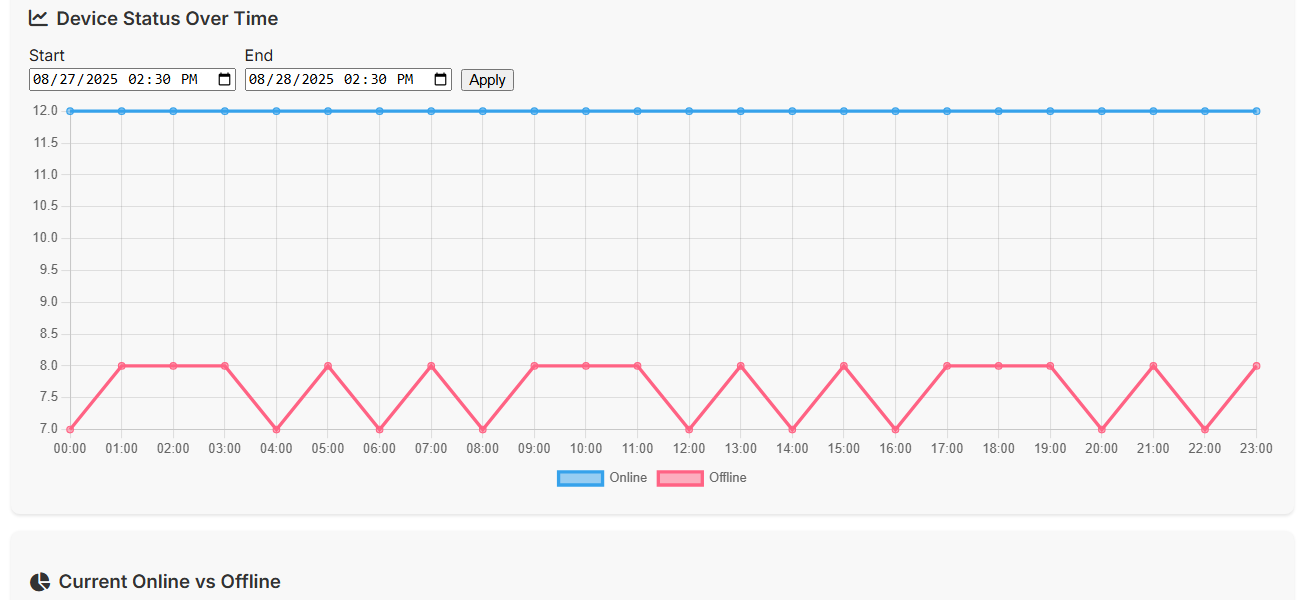
The always-on engine. Multi-protocol polling (ICMP, TCP, HTTP, SNMP, and WinRM for Windows services and resources) on per-device schedules tracks live up/down status, CPU and RAM, and Windows-service health across the entire property. Status transitions, resource history, and hourly availability rollups are recorded for every device.
2. Operational Intelligence
Argus models the network topology. When an upstream switch fails, it walks the uplink chain, identifies the single topmost cause, and suppresses the downstream alert storm into one incident. Independent failures still page normally; downstream incidents auto-release on recovery. A Correlated Outages panel shows a switch failure that knocks out an EGM bank and a kiosk as one outage with its total revenue at risk, and a Needs Attention ranking surfaces the worst 24-hour offenders first.
3. Revenue-Impact Layer
Every gaming device carries a theoretical-win-per-hour value. Argus surfaces dollars at risk everywhere it matters: correlated outages, the war-room banner during critical events, the SLA and availability report's revenue-lost column, and the per-device detail popover.
4. Floor Visualization
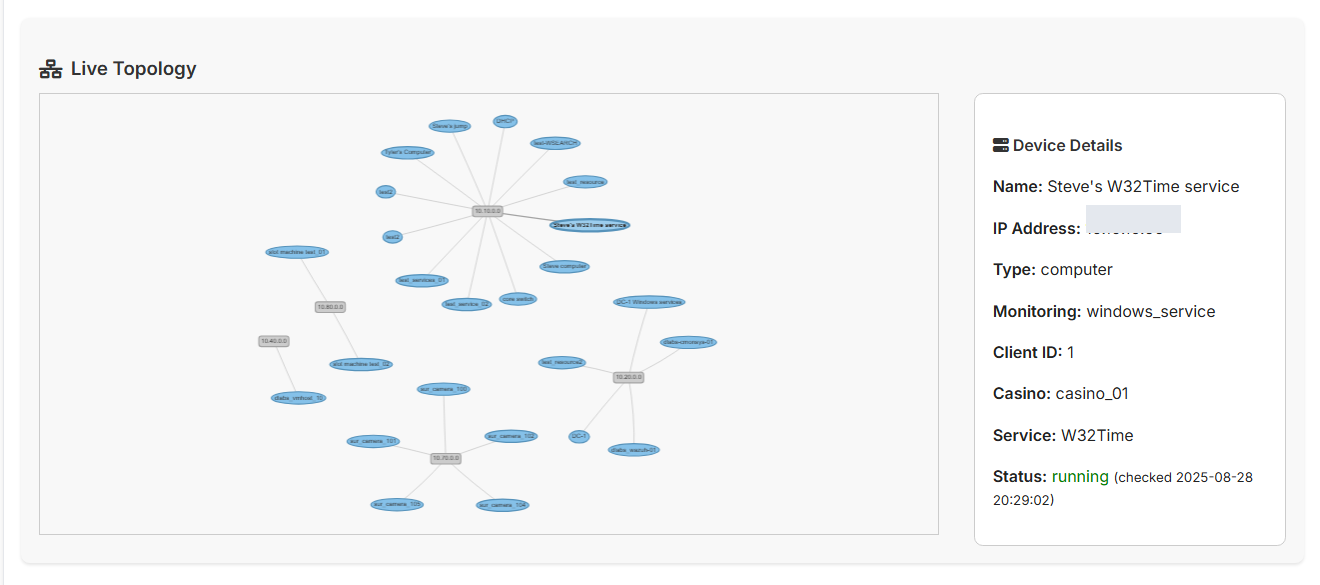
A real-time physical floor heatmap with each device placed by coordinate and colored by live status, labeled property zones, per-segment VLAN health rollups with friendly names and uptime, and an animated live topology map with automatic light and dark theming.
5. NOC and Control-Room Layer
Purpose-built for a mounted control-room display: KPI sparklines, a keyboard command palette, a full-screen rotating war-room mode, a live activity ticker, and a red-alert state that shifts the whole shell (banner, revenue at risk, audible tone, desktop notification) the moment a critical incident opens.
6. Alerts and Incident Management
Offline, service, CPU, and RAM alerts with dedupe and maintenance-window suppression, incident tracking with acknowledgement, escalation policies, and delivery to email, Slack, Teams, webhook, and SMS. Incidents carry per-device-type runbooks so remediation steps are right there in the detail view. SLA reporting produces per-client uptime reports from real check history.
7. Ask Pulse: AI floor analytics
Ask questions about floor performance in plain English (top slots by coin-in, hold percentage by bank, win by zone, occupancy, jackpots), answered right alongside the live monitoring data. Natural language is compiled to read-only, guardrailed SQL over the Aristocrat Oasis semantic views. Player names are masked for non-technician roles.
8. Player 360
The layer that connects monitoring to the guest, sourced read-only from the on-site Aristocrat Oasis CMS and joined to live device health. High-Worth Players on Floor ranks guests in active play by session theoretical win, each tied to the live health of the machine they are on; a guest on a degraded EGM is flagged for host dispatch with dollars per hour at risk. Player 360 Lookup provides a full worth profile (ADT, trip, MTD, and lifetime theoretical, average bet, visits), a live in-play panel that turns red with revenue at risk when the device is down, comps and offers, a compliance band (self-exclusion, responsible gaming, Title 31, W-2G), and recent-trip history.